MIRAGE: Multi-model Interface for Reviewing and Auditing Generative Text-to-Image AI
HCOMP, 2024 · Carnegie Mellon University
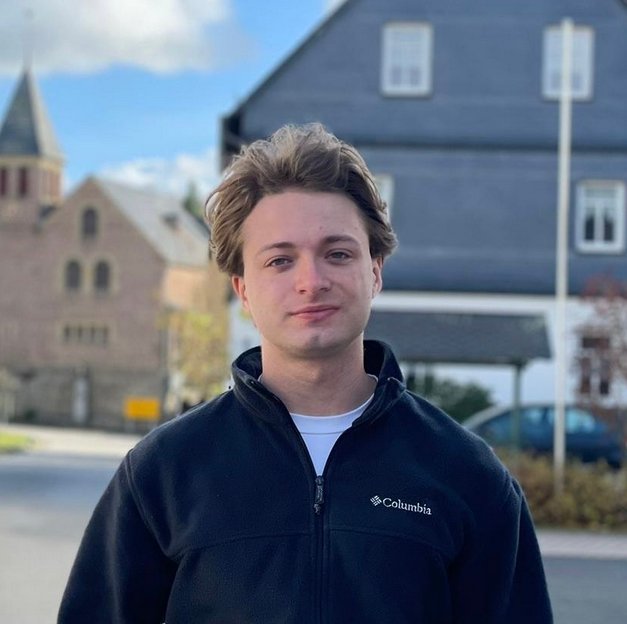 Matheus Kunzler Maldaner
 Wesley Hanwen Deng
 Jason I. Hong
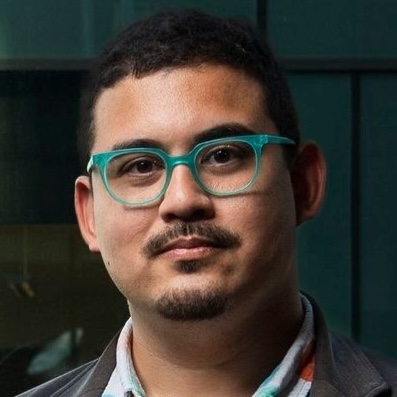 Ken Holstein
 Motahhare Eslami
What is MIRAGE?
MIRAGE is a web-based tool that lets anyone compare outputs from four text-to-image AI models on a single screen and report harmful biases through a structured workflow. It appeared as a first-author works-in-progress paper at HCOMP 2024, built during a research summer at Carnegie Mellon University's Human-Computer Interaction Institute.
MIRAGE stands for Multi-model Interface for Reviewing and Auditing Generative Text-to-Image AI. It is a web tool where anyone can type a prompt, watch four different text-to-image models respond on one screen, and file a structured report on what they noticed. The premise is simple. One model's output can look normal in isolation and clearly skewed the moment three alternatives sit next to it.
I built MIRAGE in the summer of 2024 during a research summer at Carnegie Mellon University's Human-Computer Interaction Institute, working with Wesley Hanwen Deng, Dr. Jason Hong, Dr. Ken Holstein, and Dr. Motahhare Eslami. It was my first project at CMU and my first first-author paper, presented in the works-in-progress track at HCOMP 2024. The demo still runs at mirage.matheus.wiki.
Interactive demo: how MIRAGE is wired together
hover or tap a component to see what it does
the Django app also connects to
Why everyday users should audit generative AI
Text-to-image models reproduce harmful societal stereotypes, and the people best positioned to catch those harms are often the everyday users the outputs affect. MIRAGE builds on end-user auditing research, adding the structured feedback channel that existing model comparison playgrounds still lack.
Text-to-image systems have a documented bias problem. Prior audits found Stable Diffusion rarely depicting women in professional roles and showing racial bias around crime-related prompts. Developers run internal evaluations, and those still miss harms that only become obvious to someone with the right lived experience. A growing line of research argues that diverse end users can spot harmful AI behaviors that development teams overlook.
Existing tools each solved part of the problem. IndieLabel supports end-user audits of sentiment analysis models. LLM Comparator helps developers compare language model outputs. Replicate's Zoo, a text-to-image playground, lets anyone generate from several models, though it offers no way to report what you find, and its vertical layout makes comparison tedious. MIRAGE puts the pieces together: multiple image models, one screen, and a reporting path built in. That gap is what it fills.
How MIRAGE structures bias reports
MIRAGE walks auditors through five steps. Enter a prompt, answer reflection questions while models generate, review a single model's output, compare all four side by side, then submit a structured report. The questions between steps turn a casual reaction into a usable audit record.
The workflow is deliberate about order. You start with a prompt and answer a few questions while the images generate: why you chose it, what you expect the outputs to look like, whether they match what your experience anticipated. Then you see a single model's output first, and only after reviewing it do the other three appear. Your answers accumulate into the final audit report, so the reflection is the documentation.
That sequencing captures a before-and-after. If the side-by-side view changed what you noticed, the report records exactly when the change happened. We also connected an optional discussion forum so auditors could share findings, since auditing works better as a collective activity than a solitary one.
Interactive demo: run a five-step MIRAGE audit
a clickable recreation of the workflow from the paper. all "generated images" are illustrative recreations drawn in code, not real model outputs
What do you want to audit?
Type your own prompt or pick one. Every study session started with the shared dinner party prompt.
While you wait: what do you expect the outputs to look like?
MIRAGE asks reflection questions during generation. Your answer is saved for the report.
One model responds first: SDXL-Lightning
illustrative recreation
You review a single model before seeing the rest. Did this grid match your expectation?
Now the other three appear
illustrative recreation
Your reflections become the report
Nothing extra to write. The answers you gave along the way assemble into a structured audit record.
What five participants found
In a preliminary IRB-approved study, five participants audited one shared prompt and two prompts of their own choosing. Comparing four models at once surfaced biases that single-model review missed, and participants drew directly on their identities and lived experiences to spot them.
Sessions ran roughly 30 to 45 minutes. Everyone started with the same predefined prompt, a fancy dinner party, then explored two prompts of their own, chosen with their backgrounds and identities in mind. All five found the tool easy to use. The interesting part was what comparison did to their attention.
One participant prompted for an intern working in the city of Pittsburgh. With one model, they only noted the workers were outdoors. With four, they saw darker-skinned workers in construction clothes while lighter-skinned workers wore office attire and carried keyboards and notebooks. Cultural context surfaced the same way: participants who expected the dinner party prompt to default to white men also noticed every table was long and rectangular, a Western convention, where round tables are common in Asian dining.
Three of the five described the same strategy shift. With one model they inspected individual images. With four, they read the overall distribution of outputs, looking for patterns in a model's behavior instead of flaws in a single picture. That shift is the finding I care most about.
From MIRAGE to Seeing Twice
MIRAGE was a works-in-progress paper with five participants, so the same team scaled the idea into Seeing Twice, a fifteen-participant study published at ACM Collective Intelligence 2025 that tested a contrast-first workflow and surfaced a language-fidelity gap across English, Portuguese, and Chinese prompts.
A five-person study can suggest, and it cannot conclude. So the same team carried the idea forward. In Seeing Twice, published at ACM CI 2025, fifteen participants used a refined interface with four predefined models, and we watched the same shift happen at scale. Once the side-by-side step appeared, most participants moved from analyzing individual images to reading general output patterns.
Two findings went beyond the original paper. Participants coined persistent model personalities, shorthand like cartoonish or saturated, that helped them predict how each model would behave on future prompts. And bilingual participants surfaced a language-fidelity gap: English prompts produced more accurate images than Portuguese or Chinese ones, an issue that single-model review tends to miss entirely. Comparison changed what people could see. That held up twice.
Where multi-model auditing goes next
The paper sketches three directions. Anonymous auditing would let proprietary model developers collect user feedback without exposing their models, a text-to-image model supermarket would help people choose models by use case, and a community leaderboard would rank models the way Chatbot Arena ranks chatbots.
The works-in-progress format exists for ideas that are still moving, and we used the discussion section to sketch three of them. Anonymous auditing would let companies submit proprietary models and receive structured feedback while protecting their intellectual property. A model supermarket would let anyone scan many models at once before picking one, the way a parent might want cartoonish outputs where a designer wants photorealism. And a community leaderboard, similar to Chatbot Arena, would rank models by how often users choose their outputs, giving developers a reason to fix the biases users find.
MIRAGE taught me that evaluation interfaces shape what people notice, a thread that runs from Seeing Twice to my agent benchmarking work at Microsoft Research. Auditing tools decide which harms get seen. I want to keep building the ones that widen the view.
Abstract
While generative AI systems have gained popularity in diverse applications, their potential to produce harmful outputs limits their trustworthiness and usability in different applications. Recent years have seen growing interest in engaging diverse AI users in auditing generative AI that might impact their lives. To this end, we propose MIRAGE as a web-based tool where AI users can compare outputs from multiple AI text-to-image (T2I) models by auditing AI-generated images, and report their findings in a structured way. We used MIRAGE to conduct a preliminary user study with five participants and found that MIRAGE users could leverage their own lived experiences and identities to surface previously unnoticed details around harmful biases when reviewing multiple T2I models' outputs compared to reviewing only one.
Frequently Asked Questions
Which text-to-image models does MIRAGE compare?
MIRAGE runs four models through the Replicate API: bytedance/sdxl-lightning-4step, ai-forever/kandinsky-2.2, stability-ai/stable-diffusion, and fofr/latent-consistency-model. The single-model review step shows SDXL Lightning first because it balances generation speed with image quality, which keeps a session moving while the other three finish generating in the background.
Is there a live demo of MIRAGE?
Yes. The tool runs at mirage.matheus.wiki. You can enter your own prompt, review one model's output, then expand to the full four-model comparison and walk through the same structured reporting flow the study participants used. It is the same interface described in the HCOMP 2024 paper.
What technology stack is MIRAGE built on?
The backend is Django running on Amazon Lightsail inside Docker containers. Image generation goes through the Replicate API, generated images are stored in Amazon S3 with DynamoDB handling retrieval, and AWS Lambda covers supporting computations. The optional discussion forum runs through the Discourse API.
Where was the MIRAGE paper published?
MIRAGE appeared in the works-in-progress track at HCOMP 2024, the AAAI Conference on Human Computation and Crowdsourcing. The paper is also on arXiv under the identifier 2503.19252. The expanded fifteen-participant follow-up appeared at ACM Collective Intelligence 2025 as Seeing Twice.
How were the MIRAGE study participants recruited and compensated?
The five participants were recruited through convenient sampling under an IRB-approved protocol, and each received a 15 dollar Amazon gift card. A study this small tests whether the workflow holds up at all, which is why the follow-up tripled the participant count before drawing broader conclusions.
BibTeX
@inproceedings{maldaner2024mirage,
  title={MIRAGE: Multi-model Interface for Reviewing and Auditing Generative Text-to-Image AI},
  author={Maldaner, Matheus Kunzler and Deng, Wesley Hanwen and Hong, Jason I. and Holstein, Ken and Eslami, Motahhare},
  booktitle={Proceedings of the AAAI Conference on Human Computation and Crowdsourcing (HCOMP)},
  year={2024}
}